
Our Youth Project
Launching in 2026
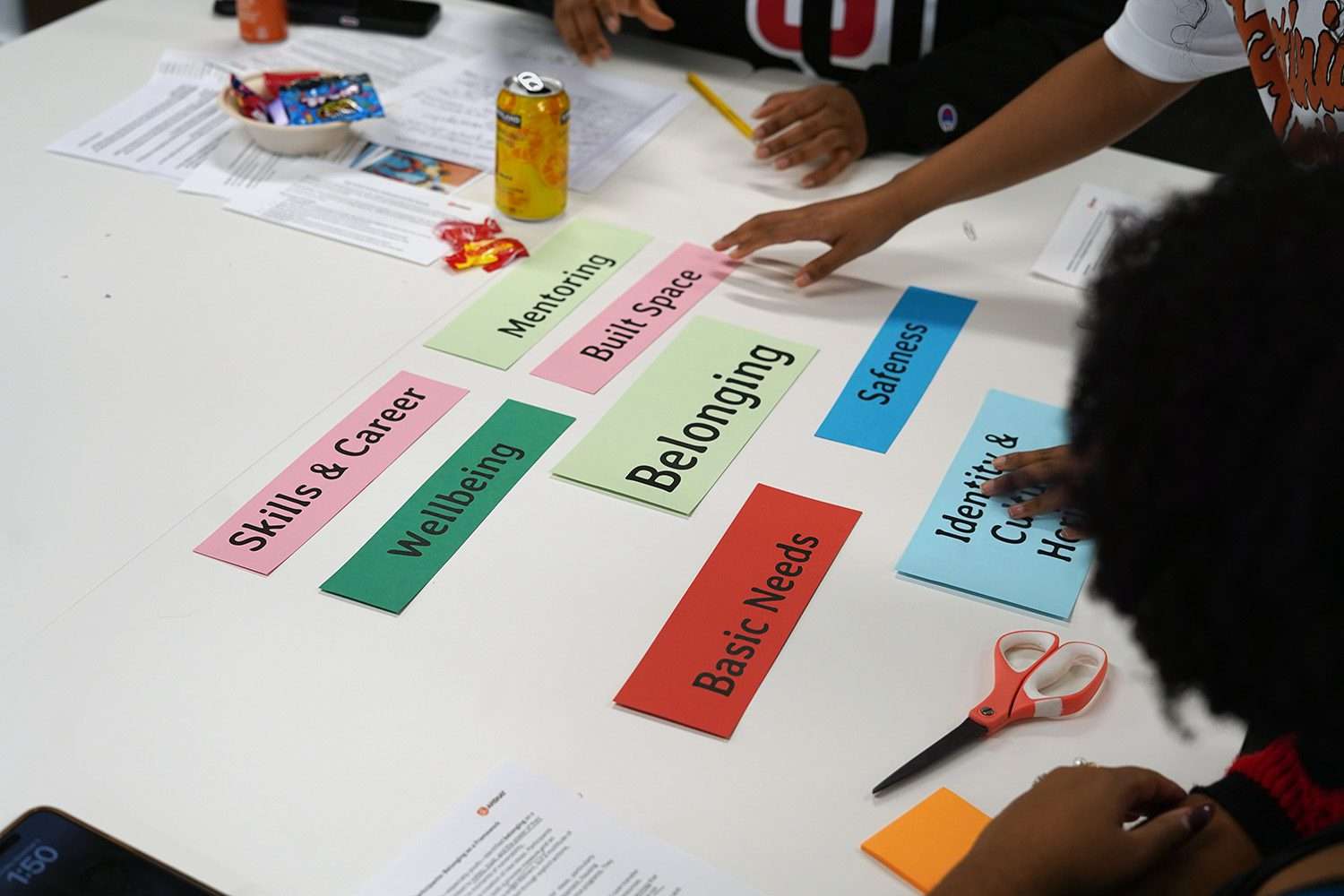
Helping youth thrive
In 2026 AHSHAY is launching a prevention network, called Our Youth Project (OYP), to create a broader infrastructure for prevention of unstable housing and youth incarceration rooted in community leadership. The project aims to reimagine belonging for youth, moving away from punitive, isolating, illegitimizing, or fragmenting approaches, and moving toward abundance, resilience, and community-rooted care. OYP will create conditions for young people to thrive while simultaneously informing larger cultural and policy shifts, becoming the next cornerstone of AHSHAY’s work.
OYP builds directly on the learnings from Fortifying Futures (FF) grounded in an understanding of the shared roots of youth incarceration and unstable housing, as well as the importance of building protected spaces to cultivate ecosystems of prevention. It will focus on serving the most-impacted youth—such as those aging out of foster care—through a long-term, multi-year commitment.
How Ideas Flowed from FF Into the Development of OYP
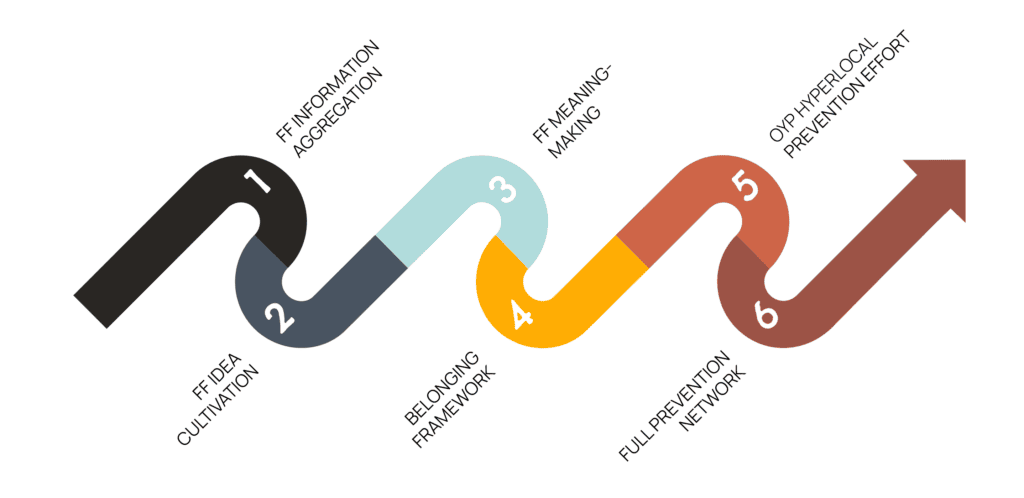

FF Information Aggregation
• Hundreds of ideas and musings along the way • Gradual lifting up of themes

FF Idea Cultivation
• Honing to 25 main concepts • Arranging and grouping them to form 5-6 coalescing areas of purpose

FF Meaning-Making
• Organizing the breadth of inputs into arrangeable ideas • Connecting the dots in them from action to prevention/promotion

Belonging Framework
• Organizing the meaning-making wisdom into a cohesive model • Understanding how factors relate to each other

OYP Hyperlocal Prevention Effort
• Develop a model for implementation • Identify an appropriate setting for application

Full Prevention Network
• Integrate model to existing prevention efforts • Scale up. • Build a network to inform policies and resource allocations
This design creates optimal conditions for cultivating trust, fostering intergenerational mentorship, and enabling young people to pursue sustained self-actualization. Programming will be youth-led and organized around creative expression, life skills development, and restorative practices, ensuring participants not only receive support, but gain agency in shaping their communities.
Core partnerships with community organizations across King County will anchor the prevention network in existing infrastructures while pushing toward systemic transformation. Collaborations will span seven primary areas identified by Fortifying Futures participants:

Basic needs
Efforts that help satisfy life essetials like food, home and transportation, help reduce existential stresses and demonstrate to youth that they are valued.
Wellbeing
Accessible, culturally-affirming, infrastructure and ecosystem that promotes wellbeing, especially behavioral wellbeing, helps people traverse many experiences and allows them to better know themselves.

Building Skills
Expand learning through community-based education and skill-sharing relationships to help young people discover, develop and celebrate their talents and interests, while staying true to youth’s needs, voice and their inherent brilliance. In doing so, we show youth the community’s investment in them.

Intergenerational Connection
Regular interactions and learning across generations builds a sense of care with certainty that “all youth are our youth” and helps youth and adults feel accountable to one another.

Space
The codevelopment of spaces – both virtual and physical – thanks to strategic placement, aesthetic components, resources and messages, where youth feel fully understood and celebrated.
Safeness
Built and natural environments that engender a true sense of safeness – without promulgating false narratives about unsafety – allow youth to attend to their growth, take risks and know that the community cares about them.

Promoting Identity
The intentional celebration of youth’s identity, journeys, voice and culture in community helps them feel seen and appreciated.
Our aim is that all youth involved in the project will experience at least four of the primary areas listed above. We will lead with relationship-building and common grounding to build a shared sense of purpose. We will track uptake, consistency, and sustainability of services over two years. A marker of success will be subsequent decreasing community levels of youth incarceration and youth experiencing unstable housing.
This project will combine a hyper-local implementation process with a broader countywide network-building component. Local partners will bring specialized expertise while aligning with the Fortifying Futures vision of interconnected wraparound supports.
OYP will serve as a convening space where organizations can build trust, share learning, and co-develop upstream strategies. It will also provide a critical opportunity to uncover and understand hidden barriers to collaboration that have previously hindered collective progress. Given the overlapping factors driving youth homelessness and incarceration, coordinated prevention efforts are not only more efficient but also more likely to be effective. OYP will be thoughtfully designed to foster deep relationship-building, protect time for creative problem-solving, and push back against scarcity thinking by laying the groundwork for systems-level change. It will also prioritize care for the caregivers, including organizational leaders who are doing the emotionally demanding and complex work of supporting impacted youth and families. By supporting their well-being and professional sustainability, the network will strengthen the entire ecosystem of care.
OYP development will be supported by funders who have been convening partners in service of these issues, as well as key players in other efforts involving multilateral collaboration. Like Fortifying Futures, the project will center youth in multigenerational cohorts. Community organizations will be involved in project planning and the implementation of belonging-oriented community programs. We will utilize participatory measurement strategies cultivated in the Fortifying Futures project to track progress and learnings, and outcomes will drive organizational policy and long-term investment decisions.